QR Glove Identification: Connecting the Right Glove to the Right Integrity Test
QR glove identification reads identification data from a compatible glove and associates that information with the integrity-testing workflow. It answers which glove is involved; it does not establish whether the glove passes a leak test. For a useful implementation, identification, test execution and review need to form one coherent process.
A test result can be technically valid yet difficult to investigate if its relationship to the physical glove is unclear. Before selecting an identification feature, QA and production teams should examine where that relationship is established, how operators confirm it and what happens when a glove changes.
Start with the identity problem, not the scanner
Map the existing workflow from glove installation to result review. Where does an operator enter an identifier? Is the identifier associated with the glove, the port, the tester or a production record? Who checks that the selected entry matches the item being tested?
These are different objects. A glove can be replaced while the port stays in place. A tester can move between ports. A useful identification design keeps those relationships understandable rather than assuming one number describes everything.
An illustrative example is a replacement glove installed between two testing sessions. The team should be able to distinguish the earlier glove from its replacement without losing the relationship to the port. This is an implementation scenario to evaluate, not a claim that any particular software automatically manages the complete lifecycle.
What RAVONA’s QR feature does
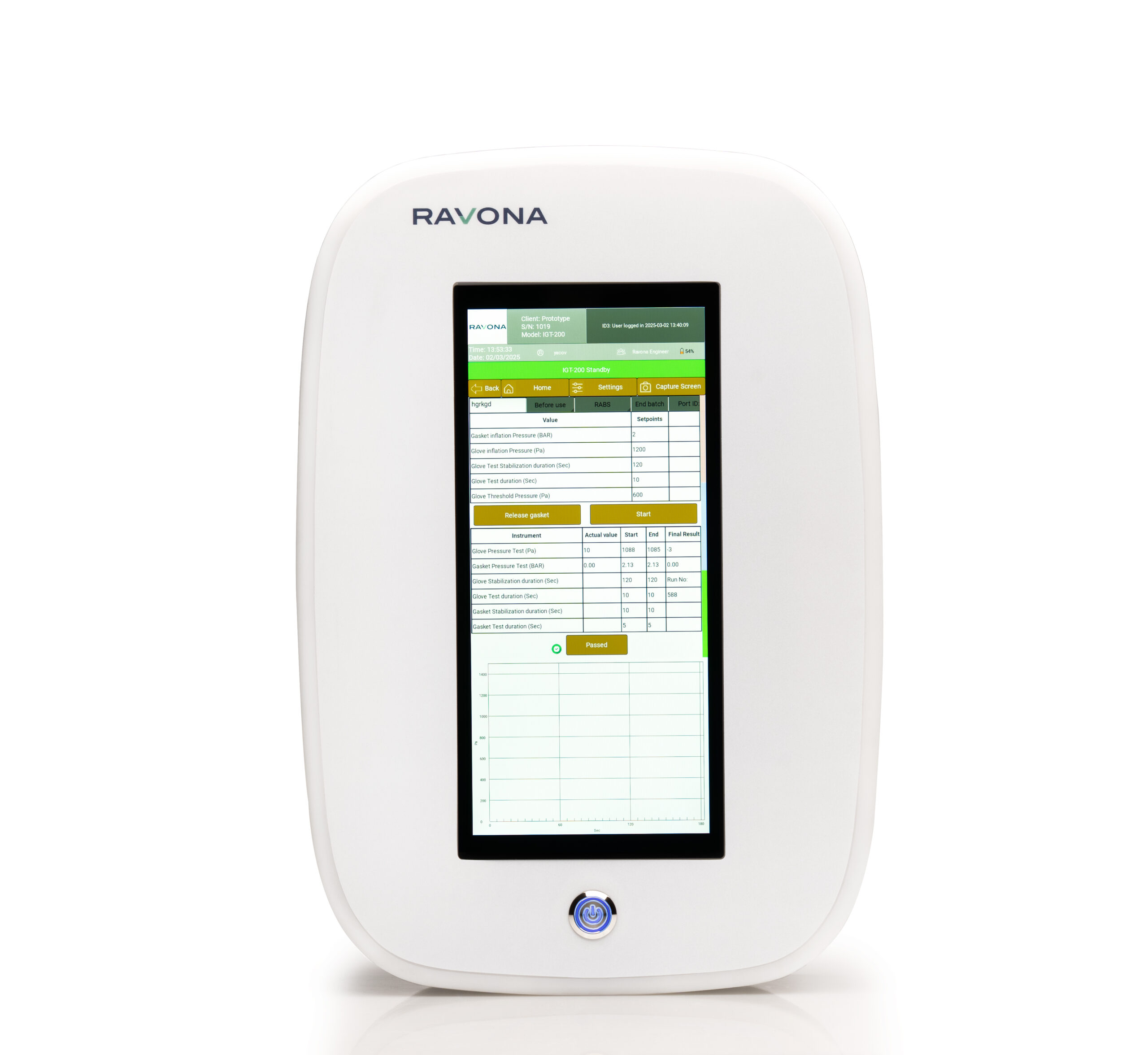
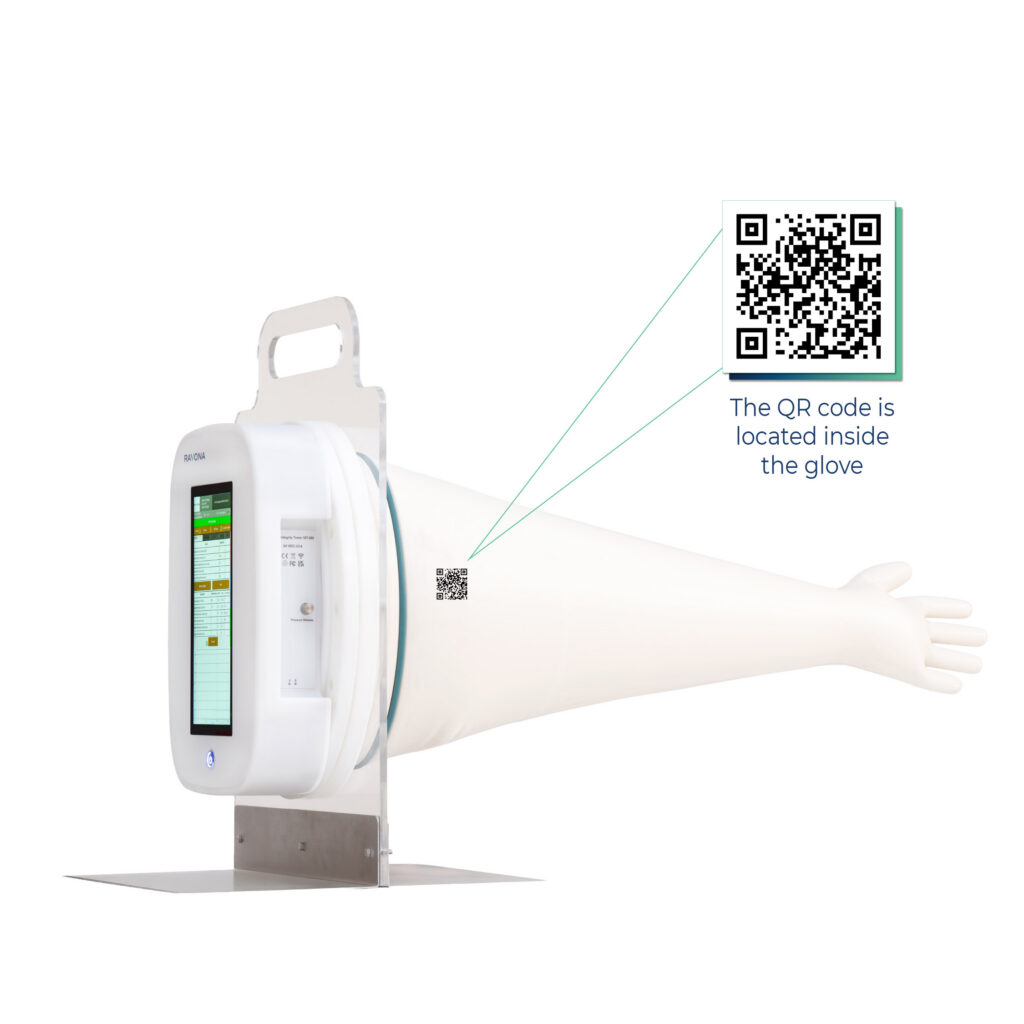
The updated RAVONA IGT catalogue describes automatic QR glove detection integrated into the IGT-200 interface, developed with AL Glove. It reads glove-specific QR identification data from compatible QR-enabled gloves. The catalogue shows the code positioned inside the glove.
The stated purpose is to associate glove identification information with testing and reduce manual identification steps. Buyers should confirm the supplied configuration, supported glove references and the exact information available in their implementation. An identification feature should be demonstrated using the intended gloves, not inferred from a general product description.
RAVONA’s catalogue also describes RFID for glove-port recognition. QR identification of a glove and RFID identification of a port can therefore address different identification needs. Confirm the proposed relationship between them with RAVONA rather than treating the two technologies as interchangeable.
Identification and integrity testing perform different jobs
Scanning a readable QR code does not demonstrate that the glove is intact. Equally, passing an integrity test does not by itself establish that the correct identification was entered. The two steps need separate acceptance criteria.
For identification, ask whether the intended glove is recognized and its information appears in the appropriate workflow. For testing, ask whether the selected method, configuration and acceptance limits are suitable for the intended application. Keep physical inspection, procedural controls and test-result review in the wider process.
This separation helps prevent an attractive interface feature from becoming an unsupported claim about contamination control. QR can support identification; it cannot replace a suitable integrity-testing procedure or make the whole installation compliant on its own.
Demonstrate ordinary work and exception cases
A supplier demonstration should include more than a successful read. Ask the team to show the expected sequence with a compatible glove, then demonstrate how an operator handles an unreadable code, an incorrect selection and a glove replacement.
Define what the operator sees, what they are permitted to correct and when the procedure requires escalation. If a manual fallback is needed, identify who authorizes it and how the reason is documented. Do not assume duplicate detection, automatic blocking or a particular audit-trail function unless it is explicitly included and demonstrated.
For example, ask an operator unfamiliar with the demonstration unit to perform the procedure from the draft instruction. Observe where interpretation is required. Those observations can inform the user requirements and training plan without making unsupported claims about error-reduction percentages.
Decide what the record must explain
Work backwards from the questions a reviewer needs to answer. Which glove was tested? Where was it installed? Which test was performed? What was the result? Was an identification exception involved? Decide which information belongs in the system record and which belongs in controlled supporting documentation.
Ask RAVONA to demonstrate the actual result and report relationship for the proposed configuration. The existence of a displayed identifier should not be treated as evidence that all desired fields are retained, exported or linked automatically.
Before acceptance, agree examples of complete records and an ownership model for review, retention and corrections. This makes the discussion concrete for production, QA and the supplier.
A focused evaluation checklist
Use a short cross-functional review: confirm compatible gloves and options; observe reading under intended handling conditions; verify how identification appears in the testing sequence; inspect the resulting records; and challenge exception handling. Assign an owner to each unresolved item.
This approach makes a purchasing discussion more useful than asking whether the equipment simply has QR. The question becomes whether the configured feature fits the facility’s identification problem and can be operated consistently.
Frequently asked questions
Does QR replace the glove integrity test?
No. Identification and leak testing answer different questions and should be evaluated separately.
Can the feature read every isolator glove?
The catalogue refers to compatible QR-enabled gloves. Confirm the intended glove references and supplied configuration with RAVONA.
Is the QR code the same as port RFID?
No. The updated catalogue describes glove-specific QR data and RFID port recognition separately. Confirm their relationship in the proposed installation.
Discuss the complete workflow with RAVONA
When evaluating the IGT-200, bring your glove list, port arrangement and current identification procedure. RAVONA can discuss the QR option against that application. Agree the acceptance evidence before purchase so the decision is based on the complete workflow rather than the presence of a scanner.