
Select a glove integrity tester by matching the testing workflow to the facility: a standalone unit for an independently managed task, a multi-glove arrangement where parallel testing is valuable, or an integrated configuration where the isolator control system needs to coordinate the sequence. The appropriate choice depends on the application and the defined scope of supply.
ה RAVONA IGT range provides these different architectures. Comparing them usefully requires more than listing features. Engineering, production and QA should first agree where testing happens, who operates it and where the resulting records are reviewed.
Describe the testing task before comparing equipment
Create an inventory of glove ports by system, location and access constraints. Include the glove types in use and any planned changes. Record whether tests are intended on installed gloves or through another agreed arrangement.
Then describe a complete working sequence: equipment preparation, positioning, identification, test selection, execution, result review and return to service. Note the handovers between operators and departments. A tester that suits one workstation may create avoidable handling elsewhere.
This exercise does not require a complex software model. A marked layout and a realistic operator walkthrough can reveal whether mobility, parallel operation or control integration is the main design need.
Understand the three RAVONA architectures
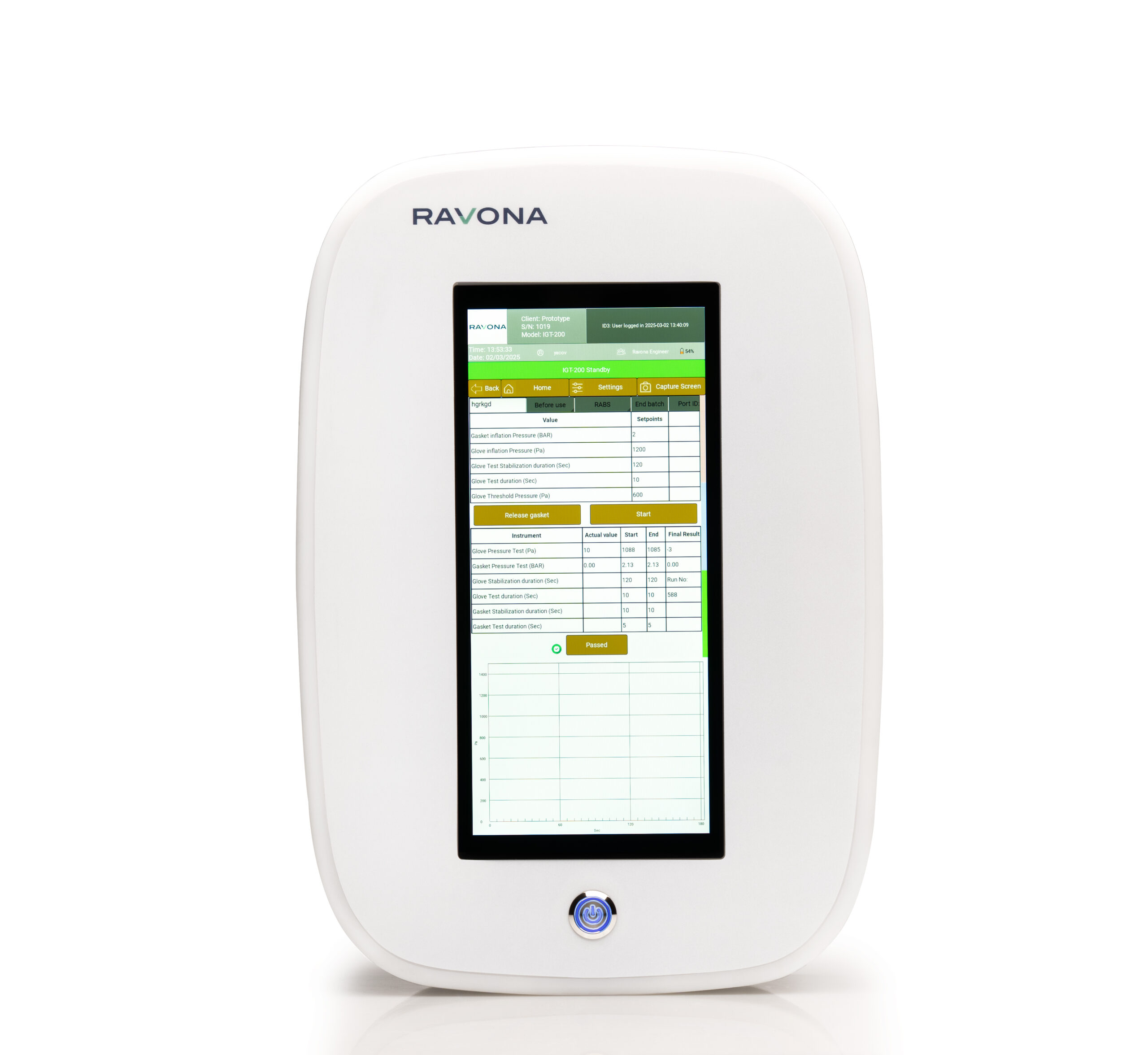
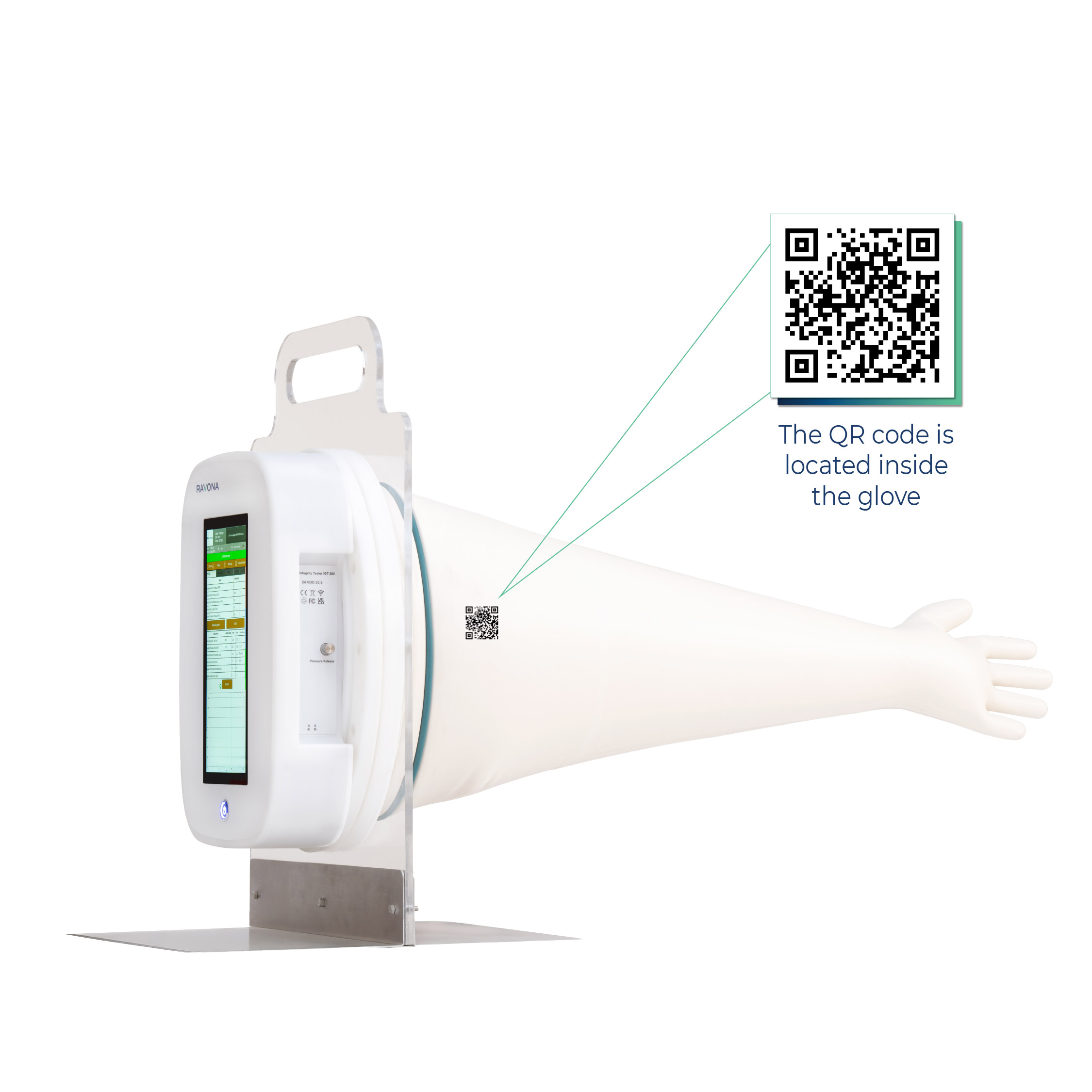
RAVONA presents the IGT-200 as a standalone tester. The IGT-300 is described as a cabinet or trolley-based multi-glove solution with HMI and SCADA functions. The IGT-400 is positioned for integration with the isolator’s HMI and PLC. Confirm the current offered configuration for each model in the supplier proposal.
These are starting points for engineering evaluation, not a ranking from basic to best. A standalone configuration may fit a defined task very well, while an integrated design may be appropriate when testing must interact with the wider equipment sequence.
Ask the supplier to identify the included hardware, software, adapters and services. Keep optional capabilities separate from standard supply, and distinguish an available engineering integration from an interface already included in the quoted equipment.
Assess throughput using the whole sequence
Test duration is only one part of the time required. Include preparation, connection, stabilization where applicable, operator movement, review and handling of unsuccessful attempts. For a multi-glove arrangement, ask how the quoted capacity is demonstrated under your intended conditions.
An illustrative comparison might examine one compact isolator and a line with many ports. The first may prioritize convenient handling; the second may prioritize coordinated or parallel work. Neither conclusion should be made from port count alone.
Use a representative demonstration and document the assumptions. Avoid converting an unverified cycle-time statement into a promised production saving. The purpose is to understand the workflow and its constraints before committing to a configuration.
Set the control and interface boundaries
For an integrated solution, define which system starts a test, holds the recipe, receives the result and handles communication loss. Establish who owns the interface specification and who will demonstrate correct operation.
If interlocks are required, describe the intended sequence in functional terms. For example, specify how the system should behave when a required test result is unavailable. Do not assume an interlock exists merely because two systems can communicate.
For a standalone system, the same ownership questions still matter. Determine how the operator obtains the correct procedure, where the result is reviewed and how the facility links the test to its own production documentation.
Agree the performance evidence
Request an approved specification for the exact model, glove type and test conditions. Published summaries can differ in how they describe sensitivity, so do not select equipment solely from a small-hole figure on a marketing page.
Ask what evidence demonstrates suitability for your intended method, how acceptance criteria are established and how repeat testing is handled. Discuss calibration, maintenance and any challenge accessories with the supplier.
A test report, a calibration record and an application suitability assessment serve different purposes. Define the evidence needed from each rather than treating one document as a substitute for the others. This gives procurement a clearer basis for comparing proposals.
Include records and support in the specification
Agree the result format, record location, access arrangements and retention responsibilities. Ask to see representative output from the quoted configuration rather than relying on a generic screenshot.
Define training and service expectations: who performs routine checks, how updates are controlled and which activities require supplier involvement. Request the documentation deliverables by name and identify whether site execution is included.
The handover should leave production with an operable procedure and QA with reviewable evidence. A feature list that omits these practical responsibilities is not yet a complete purchasing specification.
שאלות נפוצות
Is an integrated tester always preferable?
No. Integration is useful when it addresses a defined control or workflow need. It also creates interface responsibilities that must be specified and demonstrated.
Does multi-glove testing guarantee a particular throughput?
No. Confirm the offered capacity and evaluate preparation, execution and review under representative conditions.
Can marketing sensitivity figures be used as acceptance criteria?
Request the approved model-specific specification and supporting method evidence. Acceptance criteria should reflect the intended application and agreed qualification approach.
Build a proposal around your actual layout
Share a port inventory, system layout, glove list and draft sequence with RAVONA. Ask for a recommendation that identifies the proposed IGT configuration, interface boundaries and acceptance evidence. This supports a clear comparison between alternatives and helps prevent essential integration or documentation work from appearing late in the project.
Share your port layout and testing requirements with RAVONA.